OnlyFans Agencies Explained: Splits, Red Flags and Contracts
What creator agencies do, how splits are reported, red flags, what a fair contract covers, and how Belnoir caps an agency's share and keeps you in control.
Key takeaways
- There is no standard agency split. Reported commissions run from single digits to 70%, so always ask what the percentage is taken from.
- The biggest red flags are asking for your password, owning your account or content, exit fees, and getting paid before you do.
- Get every term in writing, including the percentage, the notice period and what happens to your content when it ends.
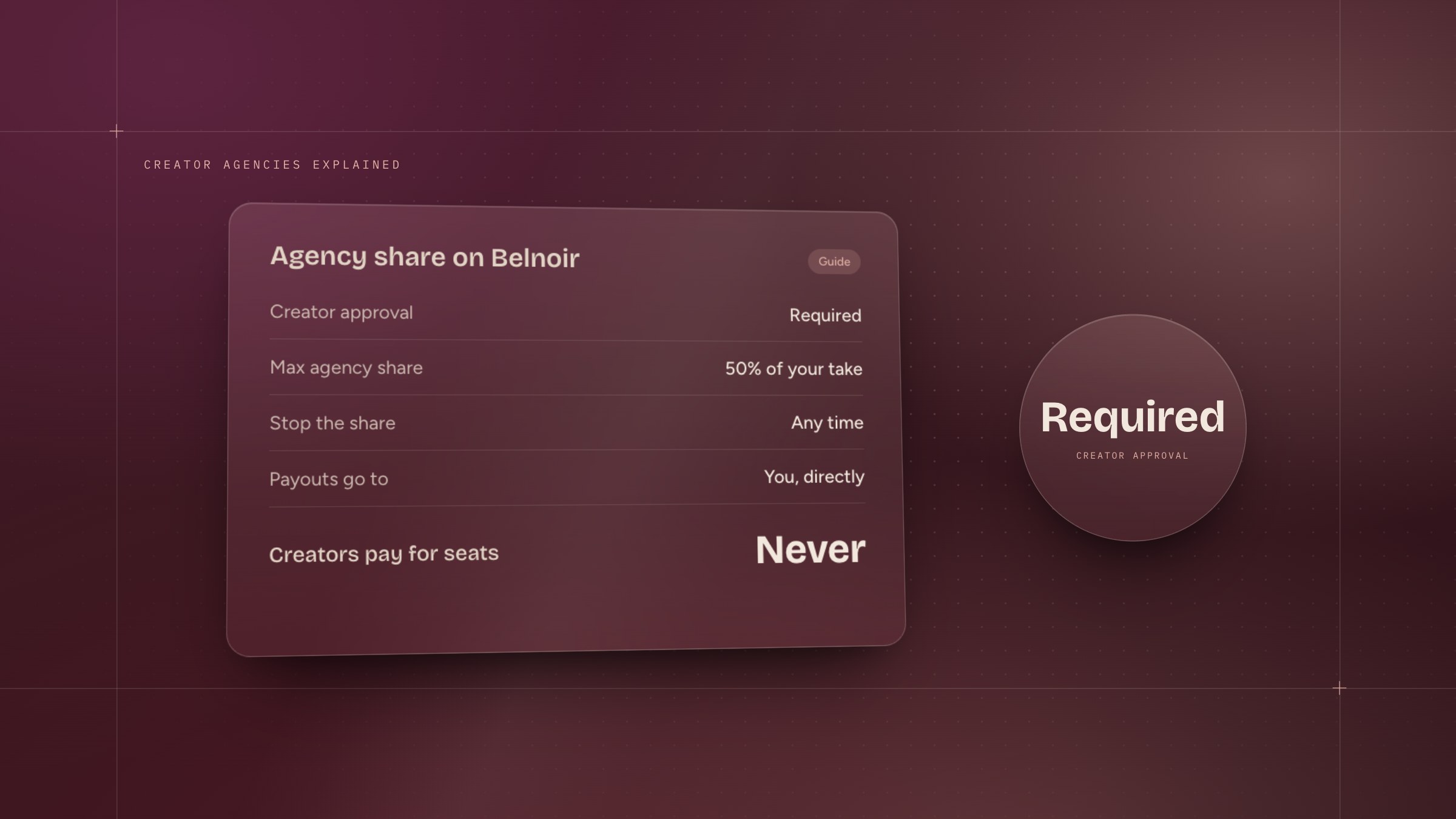
- On Belnoir an agency only works with you after you accept it, its share is capped at 50% of what you keep, and you can stop it at any time.
On this page
An OnlyFans-style agency is a business that helps a creator run their account. It usually handles fan messages, marketing and posting in return for a share of earnings. There is no standard split: Rolling Stone reported commissions from single digits to around two-thirds or more. In June 2026 the BBC spoke to 60 UK-based creators, and reports of that investigation say their managers commonly took about half of their pre-tax earnings, with some contracts reaching 70%.
A good agency can save you hours every week. A bad one can take your account, your income and your freedom to leave. This guide covers what agencies actually do, how splits work, the red flags to watch for, what a fair contract should include, and how agencies work on Belnoir. It is general information, not legal or financial advice.
One note up front: Belnoir is new and has not launched yet. Creators and agencies can sign up and get set up now, but card payments stay in test mode while our card processor reviews the business. No sales or agency shares are paid until that approval comes through.
What a Creator Agency Actually Does
Agencies sell time and know-how. The services vary from one business to the next, but most offers are built from the same pieces:
- Fan messaging: replying to messages, sending paid messages and handling custom requests. This is often done by a team of writers, usually called chatters.
- Marketing: promoting your page on social platforms, running ads and finding collaborations.
- Content planning: posting schedules, pricing advice and ideas for what to sell next.
- Admin: keeping notes on fans, tracking what sells and handling routine account tasks.
In its 2022 reporting, Rolling Stone described managers who posted content, answered fans' messages and bought ads for their creators. Messaging now gets the most scrutiny. Subscribers have filed class actions in the US claiming they paid for what they thought were direct chats with creators. As of November 2026, a federal court in California has dismissed OnlyFans' operator from the main case, while a claim against the agencies named in it continues. Whatever the courts decide, these cases are a good reason to agree clear, honest messaging rules with any agency you hire.
Hiring an agency does not change who is responsible for your account. On Belnoir, the creator stays responsible for what happens on their page, whoever is doing the typing.
Typical Revenue Splits, and Why the Numbers Vary
There is no official rate for agency work, and published numbers swing widely. In Rolling Stone's 2022 report, a marketing consultant put the industry standard at 5 to 15%, and one creator described an 8% commission. Other creators described managers asking for or allegedly taking 34%, 50%, 66% or more. In June 2026 the BBC spoke to 60 UK-based creators. According to reports of that investigation, managers commonly took about 50% of their pre-tax earnings, and some contracts the BBC saw gave the manager up to 70%.
The headline percentage is only half the story. Always ask what it is taken from. Here is the same 50% on $1,000 of fan payments, on a platform that keeps 20%:
- 50% of gross: the agency takes $500 of the $1,000, the platform takes $200, and you keep $300.
- 50% of net: the platform takes $200, the agency takes half of the remaining $800, and you keep $400.
Also check which income the share covers (subscriptions only, or tips and custom work too). Ask whether ad spend comes out before or after the split, and whether the agency's share continues after the contract ends. Two offers with the same percentage can leave you with very different amounts.
Reported agency splits
Red Flags to Watch For
Reports of the BBC investigation describe contracts that demanded full login access and charged fines for leaving early. They also describe creators who said managers changed their passwords or threatened them when they tried to renegotiate. Rolling Stone heard similar accounts, along with managers who would not show proof of ad spending. Be cautious if an agency:
- Asks for your password, or wants to change the email or phone number on your account.
- Claims ownership of your account, your content or your fan list.
- Charges an exit fee or penalty for leaving, or sets a long lock-in with no way out.
- Gets paid first and passes your share on to you, instead of the platform paying you directly.
- Has no registered business, no website and no way to check who runs it.
- Promises guaranteed earnings or refuses to show what it spends on your behalf.
- Pressures you to make content you do not want to make, or to post more than you agreed.
- Has no rules on how its chatters talk to fans in your name.
According to the same reports, OnlyFans told the BBC it is not connected with and does not endorse any management agencies. A platform may never see a contract you sign outside it, so your protection has to come from the contract itself and from how much access you hand over.
What a Fair Agency Contract Should Cover
A good agency should be comfortable putting everything in writing. Before you sign, make sure the contract answers every question in the checklist below. Do not rely on spoken promises that are not in the document.
Pay special attention to the end of the relationship. A fair contract says how either side can leave, how much notice is needed, that no penalty applies, and what happens to content the agency scheduled or still holds. It should also say the agency's share stops for sales made after the contract ends.
If you are new to contracts, an hour with a lawyer who works with creators or small businesses is usually money well spent. Ask a tax professional how an agency's share affects what you report, because that depends on where you live and how you are set up.
Before you sign
- The percentage and its baseGross or net, which income types, and whether ad spend comes off first.
- Term and exitHow long it lasts, the notice period, and confirmation there is no exit fee.
- Who owns whatYour account, content and fan list stay yours, during and after the contract.
- Access limitsExactly which tasks the agency may do, and never your password or payouts.
- Messaging rulesHow chatters write in your name and what they say if a fan asks who is replying.
- ReportingRegular statements showing sales, the agency's share and any money spent.
How Agencies Work on Belnoir
We built agency support around the red flags above, so the creator stays in control by design rather than by contract.
- Verified businesses only. An agency must upload its registration document and a certificate of good standing issued in the last six months, along with its registration number and tax ID. Staff usually decide within two business days.
- You accept it first. An agency can only work on your account after you accept it, and you work with one agency at a time.
- You choose the access. You pick which areas its people may use, such as Messages, Posts & Content, Store, BlackBook CRM and Statistics, and whether it sees your earnings totals for the last 30 days.
- No passwords. Each person in an agency seat has their own Belnoir account, passes our ID and age check, and uses two-step sign-in. They never sign in as you, and never get access to your payouts, tax details, account settings or performers' records.
- Everything is logged. Every change an agency's people make appears in your Team Activity.
- Honest messaging. Our Agency Terms say an agency's people must never claim to be someone they are not when a fan asks.
Our Agency Terms also forbid an agency from pressuring, threatening or deceiving a creator, or holding a creator's account, content, documents or money over them.
Working with an agency on Belnoir
- Step 1Agency verifiesIt proves it is a registered business in good standing, and Belnoir staff review it.
- Step 2You accept itYou choose which parts of Creator Studio its people may use and whether it sees your earnings.
- Step 3It proposes a shareOptional. You see the percentage, taken from what you keep after Belnoir's fee, before you accept or decline.
- Step 4Its people workEach person has their own verified account and seat, and every change shows in your Team Activity.
- Any timeYou stay in controlStop the share for new sales, or end the agency and its people lose access.
Agency Seat Plans and Whether You Need an Agency
Agencies pay Belnoir for the seats their people work in, and creators never pay for them. Seats are shared across all of an agency's creators, and the table below shows the three plans. Plans are paid monthly in advance, by invoice or from the agency's cleared share of sales, and a plan that is not renewed stops working seven days after its paid period ends.
Not every creator needs an agency. Many of the jobs agencies charge for, such as messaging, fan notes and scheduling, are built into Creator Studio, and you can bring your own helpers instead: Pro includes two team seats and Elite includes ten. Our fee comparison shows how the numbers work. A good agency still brings real value in marketing skill and time. If you choose one, Belnoir is built so you never have to hand over your account to get that help. Ready to set up? Start at become a creator, or see the Founding 100 offer.
| Plan | Seats | Price per month | Extra seats |
|---|---|---|---|
| Agency 25 | 25 | $199 | Not available |
| Agency 50 | 50 | $349 | Not available |
| Agency 100 | 100 | $599 | $10 a month each over 100 |
Frequently Asked Questions
How much do OnlyFans agencies usually take?
There is no standard. Rolling Stone reported commissions from about 5% to two-thirds or more in 2022. Reports of a June 2026 BBC investigation into UK-based creators say managers commonly took about 50% of pre-tax earnings, with some contracts reaching 70%. Always ask whether the percentage comes from gross or net earnings.
Is it safe to give an agency my password?
Sharing your password is one of the biggest risks reported. Creators told the BBC their managers changed their passwords or locked them out. On Belnoir you never need to share it: agency people work through their own verified accounts in seats you control.
Can I end an agency's access on Belnoir at any time?
Yes. Belnoir always lets you stop an agency's share or end the agency from your dashboard, and it acts on your choice without needing the agency's agreement. Any contract you signed with the agency outside Belnoir is a separate matter, so talk to a lawyer about what it means for you.
Who pays the agency its share on Belnoir?
Belnoir does. If you accept a share, we take it off your payout and pay it to the agency's own Paxum account once the sale clears. Your earnings always go to your own payout account, and a refunded sale reverses the agency's share of it.
Can my agency see my earnings or payout details?
Only if you allow it, and then only your totals for the last 30 days. An agency's people never see your payout details, tax details or account settings.
What does an agency pay to work on Belnoir?
Seat plans are $199 a month for 25 seats, $349 for 50 and $599 for 100, plus $10 a month for each seat over 100. Creators never pay for agency seats.
Sources
- Rolling Stone (Australia edition): OnlyFans model management industry, EJ Dickson, January 19, 2022
- MyJoyOnline: report on the BBC investigation into OnlyFans managers, June 15, 2026
- IBTimes UK: report on the BBC investigation, June 15, 2026
- BBC News investigation (original article, as linked by IBTimes UK; also aired as the BBC One documentary OnlyFans: Inside the Machine, June 15, 2026)
- Net Influencer: subscribers' class action over agency chatters, April 2, 2025
- Bloomberg Law: OnlyFans operator dismissed from chatter scam class action, May 22, 2026
Other platforms' terms change. Figures were checked against the sources above on November 11, 2026. This article is general information, not financial, tax or legal advice.
More from the Blog
All articles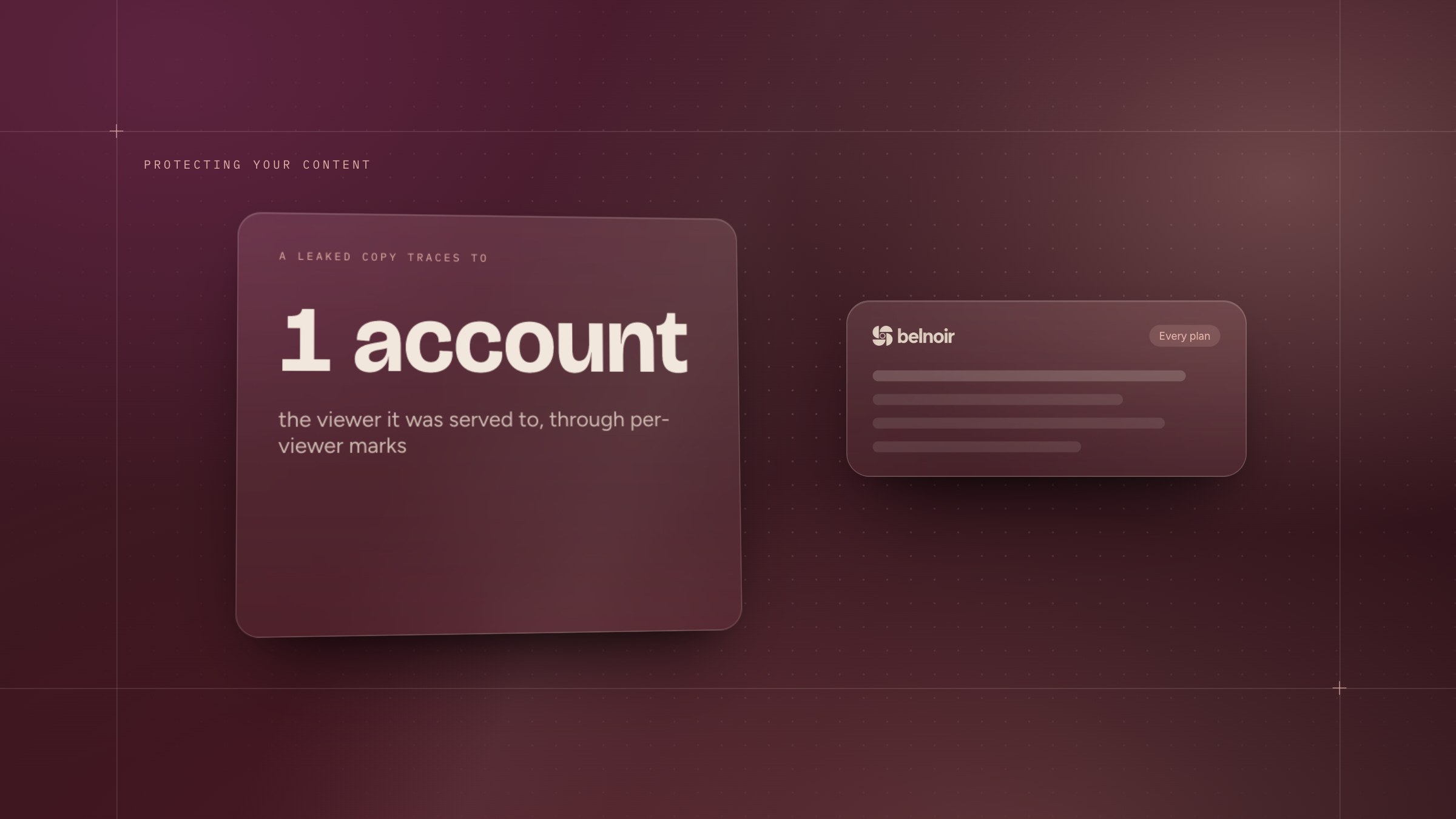
Guides
How to Protect Your Content From Leaks (2026 Creator Guide)
How creators protect paid content from leaks: watermarks and leak tracing, blocked downloads, finding copies, DMCA takedown basics and what Belnoir does for you.
· 9 min read
Money
How Much Do Subscription Creators Make? Realistic Math (2026)
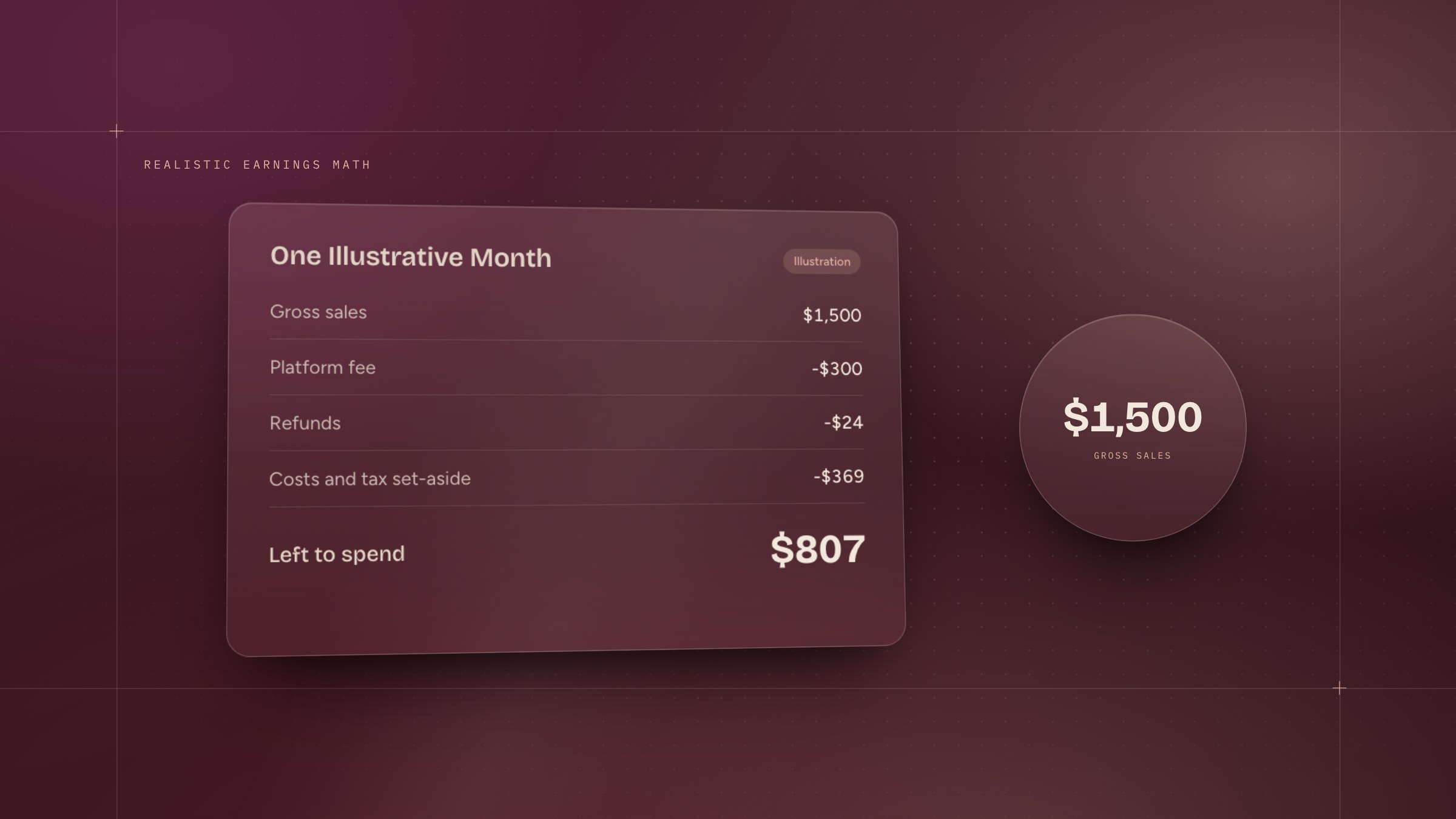
How much subscription creators really keep: worked examples of platform fees, refunds, holds, churn, agency cuts and taxes, with IRS sources. Not tax advice.
· 9 min read
Comparisons
OnlyFans vs Fansly for Creators: Fees, Payouts and Rules (2026)
OnlyFans vs Fansly for creators in 2026: a neutral, sourced comparison of fees, payouts, holds, minimums, discovery, verification and content rules.
· 8 min read